

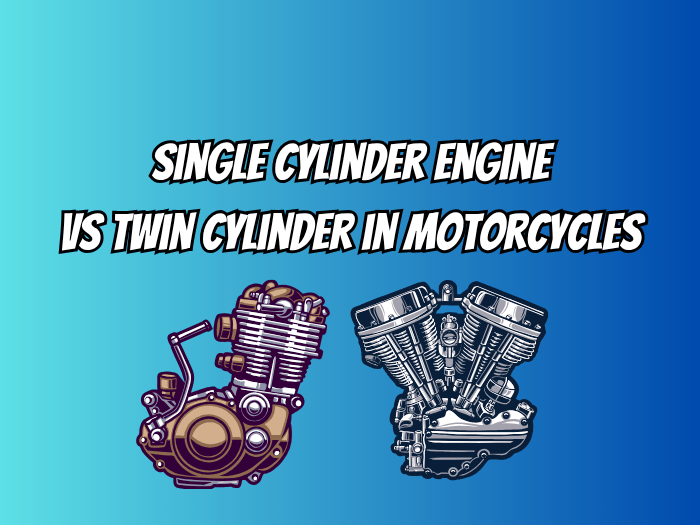
Motorcycles use different types of engines to offer different riding experiences, efficiency, power, and performance. Single-cylinder and twin-cylinder engines are two of the most common types, each with its own unique characteristics. Below is a detailed comparison to help you compare the advantages and disadvantages of each.
1. Single-cylinder engine
A single-cylinder engine has only one cylinder in its engine block. It is common in small-displacement motorcycles, such as work bikes, naked bikes from 125cc to 200cc, small-displacement scooters, and small-displacement enduro motorcycles.
Advantages:
- Mechanical simplicity: Fewer components, which facilitates maintenance and reduces maintenance costs, allowing the user to perform some basic maintenance tasks.
- Lightness: They are generally lighter, facilitating agile and maneuverable driving.
- Costs: Lower manufacturing and acquisition costs.
- Fuel consumption: They tend to be more fuel-efficient compared to a twin-cylinder engine (with the same displacement), making them ideal for urban commuting, work motorcycles, and everyday use.
- Ease of maintenance: Because the engines are simpler, it is easier for the user to perform maintenance tasks without having to take the motorcycle to a workshop.
Disadvantages:
- Limited performance: Less power and torque compared to twin-cylinder engines.
- Vibrations: Greater tendency to vibrate due to the cylinder stroke, which can affect comfort. Although there are currently motorcycles with crankshafts equipped with counterweights to reduce these vibrations.
- RPM range: Generally, to maintain an appropriate speed on highway sections, a single-cylinder engine usually requires more effort than a twin-cylinder engine, although there may always be a few exceptions.
- Performance on slopes: Single-cylinder engines generally have poorer performance on slopes compared to twin-cylinder engines.
- Sound: They have a characteristic, simpler sound, which is often less appealing to some users, and they tend to sound louder than a twin-cylinder engine, which can be more tiring and annoying on long trips.
- Traveling with a passenger: If you frequently travel with a passenger, you’ll probably notice that the engine becomes less responsive when it has to move more cargo.
Twin-cylinder engine
A twin-cylinder engine has two cylinders, which can be arranged in different configurations (inline (Parallel Twin) or V (V twin). It is common in medium and high-displacement motorcycles, especially in Custom, Naked, Trail or semi-sport models.
Advantages:
- More power and torque: Thanks to the dual power source, a more continuous thrust is achieved compared to a single-cylinder engine.
- Smoother ride: Less vibration compared to single-cylinder engines, providing greater comfort for long trips.
- Deeper sound: The characteristic sound is usually more attractive and less tiring to listen to on long trips.
- Quicker response: Better acceleration response and power recovery.
- RPM range: These engines can generally operate at more relaxed rpm ranges on the highway compared to single-cylinder engines with similar characteristics, although there are always exceptions to the rule.
- Performance on slopes: Twin-cylinder engines generally perform better when climbing hills due to their greater continuity of thrust.
- Traveling with a passenger: A twin-cylinder engine can generally perform better when carrying a passenger compared to a single-cylinder engine.
Disadvantages:
- Mechanical complexity: A greater number of components, which can translate into higher maintenance and repair costs.
- Weight: These are generally heavier engines, which can affect agility during quick maneuvers on motorcycles with twin-cylinder engines.
- Cost: They tend to be more expensive both to purchase and maintain.
- Consumption: They can consume more fuel, although this depends on the design, as some twin-cylinder engines have shown quite satisfactory efficiency figures.
- Need for a cooling system: Twin-cylinder engines typically generate higher temperatures, and their performance makes it necessary to incorporate cooling systems, either oil-based, such as oil coolers, or water-cooling systems, which increases maintenance costs.
- Ease of maintenance: Compared to a single-cylinder engine, its mechanics are more complex, and it will likely be more necessary to rely on a mechanic to carry out maintenance.
Conclusion:
The choice between a single-cylinder or twin-cylinder engine depends on your motorcycle’s intended use and your personal preferences. If you’re looking for an economical, lightweight, and easy-to-maintain motorcycle for urban commuting or as a work bike, a single-cylinder is an excellent choice. However, if you want greater performance, smoothness, and a better experience for longer trips and performance, a twin-cylinder engine may better meet your expectations, although you should consider the higher maintenance costs of the latter.