

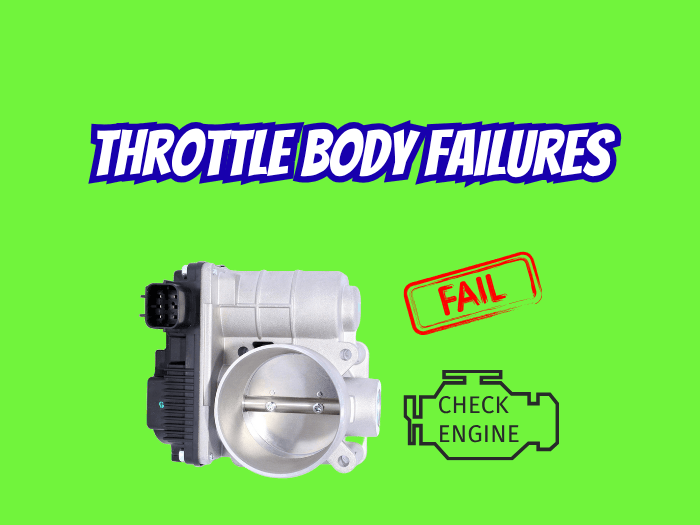
The throttle body is a component that controls the opening of the throttle, allowing more or less air to enter the engine depending on the position of the accelerator pedal. It is equipped with a valve (or butterfly) that opens and closes in response to driver input; that is, the more the driver accelerates, the more the throttle body butterfly opens. On some models, it includes sensors that transmit information to the ECU (engine control unit).
Symptoms of throttle body failure
- Difficulty starting the engine: It may take longer to start the engine or require several attempts to start it.
- Unstable idle: The engine may idle roughly, with revs rising and falling, or even stalling at times.
- Lack of acceleration response: Acceleration may be slow, or there may be a jerky start when you press the accelerator pedal.
- Loss of power: You may notice that the vehicle is unresponsive or feels less powerful than usual.
- Increased fuel consumption: A dirty or faulty throttle body can cause the engine to consume more gas.
- Check engine light on: In some cases, the check engine light may come on.
If you experience these symptoms, it’s a good idea to clean your throttle body or have it checked by a mechanic, as a clean throttle body helps keep your engine running efficiently.
Fault codes associated with the throttle body:
The associated fault codes are as follows from the list, these can be obtained by diagnostics with an OBD2 scanner:
- P2135 – Accelerator Pedal Position Sensor – Circuit Malfunction or Poor Performance
- P2138 – Accelerator Pedal Position Sensor – High or Low Input
- P2100 – Throttle Control System – Throttle Actuator Circuit
- P2101 – Throttle Control System – Throttle Actuator Performance
- P2102 – Throttle Control System – Actuator Circuit Problem
- P2110 – Throttle Actuator – Circuit Performance
- P2111 – Throttle Actuator – Circuit Open or Short
- P2112 – Throttle Actuator – Circuit Performance
Causes that generate throttle body failures:
- Faulty cables: Faulty cables that send interrupted signals to the throttle body can affect its proper functioning. The cables that run from the throttle body to the ECU can also cause malfunctions.
- Servomotor failures: In electronic throttle bodies, the servomotor or its internal mechanisms may fail, affecting the proper functioning of the throttle valve.
- Dirt: The most common throttle body failure is the accumulation of dirt, carbon deposits, or grease. This can affect the throttle body’s opening and closing mechanism or the correct reading of its sensors.
- Pedal failures: If the electronic accelerator pedal signals or a poor condition of the throttle cable in mechanical throttle bodies are present, the pedal may not operate correctly.
How is the throttle body cleaned?
Throttle body cleaning should be performed very carefully and preferably by a professional mechanic. The process involves disconnecting the throttle body, disassembling it, and cleaning the surfaces with specific products such as injector cleaner or throttle body/carburetor cleaner, which remove carbon residue and grease. It is important not to damage the sensors or other delicate parts during this process.