

The cooling system is one of the most important components in any modern vehicle. Its primary function is to keep the engine operating within a safe temperature range, preventing overheating and helping extend the lifespan of multiple internal components.
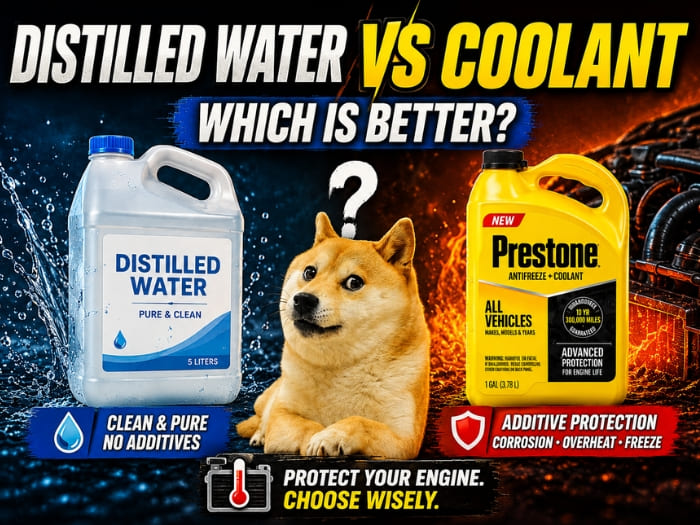
However, there is still ongoing debate among drivers about whether it is advisable to use only distilled water or if coolant is truly worth the investment. While distilled water does offer certain advantages, the reality is that modern coolants provide much more comprehensive protection thanks to their specialized additive packages.
What Is Distilled Water?
Distilled water is purified water that has had minerals, salts, and impurities removed through a distillation process. Unlike tap water, it contains no calcium or minerals that can create scale buildup or deposits inside the radiator and engine passages.
For this reason, many people consider distilled water a “cleaner” alternative for a vehicle’s cooling system.
Some of its main advantages include:
- It does not easily create mineral deposits.
- It has excellent heat transfer properties.
- It is inexpensive and widely available.
- It reduces the risk of corrosion associated with tap water.
However, using distilled water alone also has significant limitations.
Problems With Using Only Distilled Water
Although distilled water helps prevent mineral buildup, it does not provide adequate protection for a modern cooling system on its own.
The main issue is that water lacks corrosion inhibitors and lubricating additives, which can accelerate internal wear on several components.
Over time, using only distilled water may contribute to:
- Internal radiator corrosion.
- Oxidation of metal passages.
- Water pump damage.
- Cavitation formation.
- Premature wear of seals and gaskets.
- Freezing risk in cold climates.
- Reduced protection against high temperatures.
Additionally, pure water boils at a lower temperature than many modern coolants, resulting in a smaller thermal safety margin.
What Is Coolant?
Coolant is a specially formulated fluid designed for automotive cooling systems. It is typically composed of demineralized water combined with glycol-based compounds and a package of chemical additives engineered to protect the engine.
These additives are one of the biggest advantages coolant has over distilled water alone.
The Biggest Advantage of Coolant: Its Additive Package
Modern coolants contain additives that perform several critical functions within the cooling system.
Corrosion Protection
Corrosion inhibitors help protect aluminum, iron, copper, and other metals found throughout the engine and radiator.
This is especially important in modern engines, where multiple metal alloys work together. These additives are specifically designed to prevent galvanic corrosion and extend component life.
Water Pump Lubrication
Many coolants contain lubricating agents that help reduce wear on the water pump and its internal seals.
When only water is used, the pump may experience increased friction and wear over time.
Cavitation Prevention
Cavitation occurs when tiny vapor bubbles form and violently collapse inside the cooling system, causing microscopic damage to metal surfaces, particularly the water pump impeller.
Coolant additives help minimize this phenomenon, especially in high-performance engines and diesel-powered vehicles.
Freeze and Boil Protection
Coolant also expands the operating temperature range of the cooling system by:
- Lowering the freezing point.
- Raising the boiling point.
This allows the engine to operate more safely in both extremely cold weather and high-temperature or heavy-load conditions.
The ethylene glycol commonly found in coolants is responsible for lowering the freezing point while simultaneously increasing the boiling point.
Longer Cooling System Life
Thanks to its protective additives, coolant helps extend the lifespan of:
- The radiator.
- The water pump.
- The thermostat.
- Cooling passages and hoses.
- Gaskets and seals.
- The heater core.
Over the long term, this can result in lower maintenance and repair costs.
So, Which One Is Better?
In most situations, using a high-quality coolant is the best option for protecting both the engine and the cooling system.
Distilled water can be useful as a supplement or mixing component in specific situations, but using water alone generally does not provide the same level of protection as a properly formulated coolant.
In fact, many vehicle manufacturers explicitly recommend using a coolant that meets the vehicle’s specifications to prevent corrosion, cavitation, and internal damage.
Can Coolant Be Mixed With Distilled Water?
Yes. Many concentrated coolants are specifically designed to be mixed with distilled water, commonly in a 50/50 ratio.
This combination allows you to benefit from:
- The excellent heat transfer properties of water.
- The chemical protection provided by coolant.
However, it is important to use distilled or demineralized water rather than tap water, since minerals can cause deposits and corrosion over time.
Conclusion
Although distilled water is significantly better than tap water for a cooling system, it still falls well short of a modern coolant when it comes to overall protection.
The real value of coolant lies in its additive package: corrosion inhibitors, lubricants, thermal stabilizers, and anti-cavitation agents that help protect the engine over the long term.
For this reason, using a high-quality coolant that meets your vehicle manufacturer’s specifications is usually one of the best decisions you can make to maintain a reliable and long-lasting cooling system.