

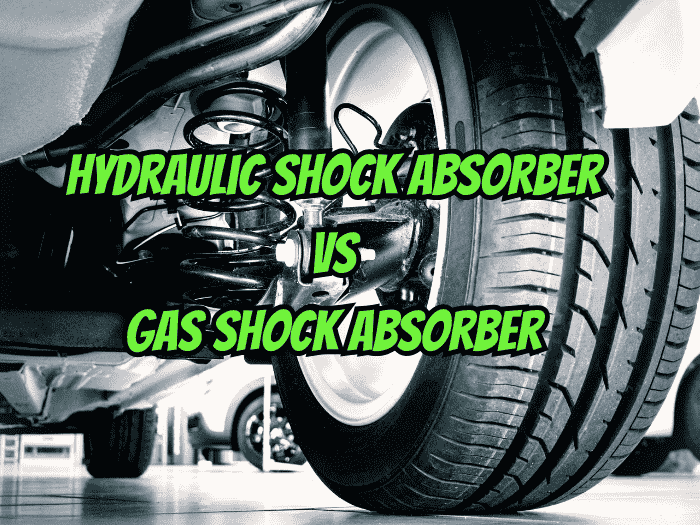
Hydraulic vs gas shock absorbers is one of the most common comparisons drivers face when it is time to replace their vehicle’s suspension components. While both perform the same basic function, there are important differences in ride comfort, handling, responsiveness, and durability.
If you need to replace your vehicle’s shock absorbers, you have probably come across two main options: hydraulic shocks and gas-charged shocks.
In this article, we’ll explain how each type works, their advantages and disadvantages, and which option may be best suited to your driving style and everyday needs.
How Does Each Type of Shock Absorber Work?
Hydraulic Shock Absorbers
Hydraulic shock absorbers, also known as oil-filled shocks, use hydraulic fluid to dampen suspension movement. They work through a piston that moves inside a cylinder filled with oil. The resistance created as the oil flows through internal valves provides the damping effect that helps control suspension movement.
Most traditional shock absorbers use this design.
Gas Shock Absorbers
Gas shock absorbers also contain hydraulic oil, but they include a chamber filled with high-pressure nitrogen gas. This gas helps maintain constant pressure inside the shock absorber and reduces oil foaming, which can occur during demanding driving conditions.
As a result, gas shocks typically provide more consistent performance, improved stability, and faster response to road irregularities.
Advantages and Disadvantages
Hydraulic Shock Absorbers
Advantages
- Provide a smoother and more comfortable ride.
- Transmit less road noise and vibration into the cabin.
- Generally cost less than gas-charged shocks.
Disadvantages
- Less effective at maintaining tire contact with the road during aggressive or high-speed driving.
- More susceptible to heat buildup under demanding conditions.
- May experience reduced performance as temperatures increase.
Gas Shock Absorbers
Advantages
- Better cornering stability and improved handling.
- Faster response to bumps and uneven road surfaces.
- Reduced risk of performance loss caused by heat and oil foaming.
- Typically offer more consistent performance over time.
Disadvantages
Comparison Table
| Feature | Hydraulic Shocks | Gas Shocks |
|---|---|---|
| Ride Comfort | ⭐⭐⭐⭐⭐ | ⭐⭐⭐ |
| Cornering Stability | ⭐⭐⭐ | ⭐⭐⭐⭐⭐ |
| Response to Bumps | ⭐⭐⭐ | ⭐⭐⭐⭐⭐ |
| Road Noise and Vibrations | Lower | Higher |
| Durability | Good | Very Good |
| Price | More Affordable | More Expensive |
Conclusion
There is no single shock absorber type that is objectively better for every driver.
Hydraulic shock absorbers stand out for their smooth and comfortable ride quality, making them an excellent choice for daily commuting and urban driving. Gas shock absorbers, on the other hand, offer quicker response, improved stability, and more precise handling, especially at higher speeds and on challenging roads.
For everyday city driving, hydraulic shocks remain a solid and cost-effective option. However, drivers who frequently travel long distances, drive on highways, or prefer a more responsive driving experience may benefit from choosing gas-charged shock absorbers.
Ultimately, the best choice depends on your vehicle, budget, driving style, and the road conditions you encounter most often.