

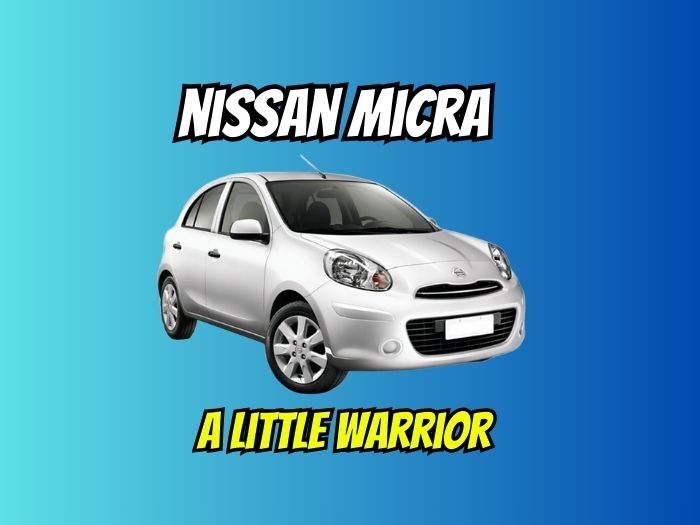
The Nissan Micra has long been one of Nissan’s most popular compact hatchbacks worldwide. Known for its efficiency, simplicity, and urban-friendly size, the Micra—especially from the K13 generation onward—has remained a practical option for drivers looking for low running costs and everyday usability.
This article takes a closer look at the strengths and weaknesses of the Nissan Micra, focusing on fuel economy, engine performance, compact design, and real-world ownership experience.
Compact Design Made for the City
One of the Nissan Micra’s strongest points is its compact size. From the K13 generation forward, the Micra was clearly designed with urban driving in mind.
Its short length and tight turning radius make it:
- Easy to park in crowded cities
- Comfortable to drive in narrow streets
- Ideal for new drivers or daily commuting
Despite its small exterior, interior space is generally well optimized for the segment, especially in the front seats.
Pros
- Excellent maneuverability
- Easy parking
- Lightweight body improves efficiency
Cons
- Rear seat space is limited for taller passengers
- Trunk capacity is modest compared to larger hatchbacks
Fuel Economy: One of Its Biggest Advantages
Fuel efficiency is where the Nissan Micra truly stands out. From the K13 generation onward, Micra engines were engineered to keep fuel consumption low without sacrificing daily usability.
Depending on engine and market, real-world fuel economy is often:
- City driving: good efficiency for stop-and-go traffic
- Highway driving: stable and economical at cruising speeds
- Combined use: competitive within the subcompact hatchback segment
This makes the Micra a strong choice for drivers who prioritize low fuel costs and high mileage per tank.
Engine Performance and Power
The Nissan Micra K13 and newer generations came with several petrol engine options depending on market, typically ranging from 1.0L to 1.6L.
While the Micra is not designed as a performance car, its engines deliver:
- Adequate power for city and highway use
- Smooth acceleration for daily driving
- Reliable performance when properly maintained
The 1.5L and 1.6L engines, in particular, offer a good balance between power and efficiency, making the car feel responsive without significantly increasing fuel consumption.
Pros
- Engines feel lively thanks to the low vehicle weight
- Good balance between power and economy
Cons
- Not a sporty driving experience
- Automatic transmissions in older versions may feel outdated
Reliability and Maintenance
From a reliability standpoint, the Nissan Micra has built a reputation as a generally dependable small car. Most common issues reported by owners tend to be minor and related to wear items rather than major mechanical failures.
Maintenance costs are usually:
- Affordable
- Predictable
- Lower than average for the segment
This makes the Micra especially attractive as a used car or long-term daily driver.
Safety and Equipment Considerations
Safety equipment varies significantly by year and market. While newer Micra versions improved in this area, earlier K13 models may feel basic compared to newer competitors.
Potential buyers should pay attention to:
- Airbag count
- Stability control availability
- Trim level and safety package
This is one area where the Micra may fall behind more modern rivals.
Pros and Cons Summary
✅ Pros
- Excellent fuel economy
- Compact and city-friendly size
- Reliable and simple mechanical design
- Low ownership and maintenance costs
❌ Cons
- Limited interior and cargo space
- Older automatic gearboxes feel outdated
- Safety features depend heavily on version and year
Is the Nissan Micra Worth It?
If you are looking for a fuel-efficient, compact, and affordable hatchback, the Nissan Micra (K13 and newer) remains a solid option—especially for urban driving and daily commuting.
It may not offer cutting-edge technology or sporty performance, but it delivers where it matters most: low running costs, easy driving, and proven reliability.
For drivers who value practicality over flash, the Nissan Micra continues to be a sensible and cost-effective choice.